MikroTik KNOT Gateway HL9
⚡ The essentials in 60 seconds
- soc — Qualcomm IPQ-5010 dual-core 64-bit Arm @ 800 MHz
- ram — 256MB
- storage — 128MB NAND flash
- wifi_halow — 915 MHz IEEE 802.11ah via Morse Micro MM6108 SoC
- wifi — 2.4 GHz Wi-Fi 6 (802.11b/g/n/ax), 1x1, up to 287 Mbps
- bluetooth — Bluetooth 5.1 LE
- On this board : 9 tutorials · 10 code
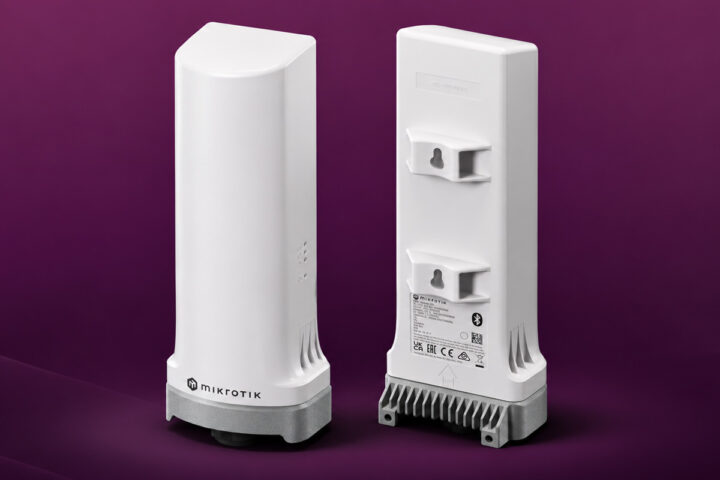
Imagine a small, rugged box mounted on a pole in the middle of a vast wheat field, or perhaps attached to the side of a shipping container in a busy port. This device is not just a simple sensor; it is a sophisticated communication hub designed to bridge the gap between tiny, low-power sensors and the vast, complex infrastructure of the modern internet. The MikroTik KNOT Gateway HL9 represents a specific class of hardware known as an IoT gateway, tailored for outdoor environments where reliability and connectivity are paramount. To understand its value, one must first grasp the challenge it solves: how to collect data from hundreds of small, battery-operated devices scattered over large areas and send that information to a central server without requiring a complex, expensive, or power-hungry network infrastructure. This gateway addresses that challenge by combining multiple wireless technologies into a single, weather-resistant unit, acting as a translator between the quiet whispers of small sensors and the loud conversations of the global network.
At the heart of this device lies its processing brain, a Qualcomm IPQ-5010 dual-core Arm64 processor running at 800 MHz. While this clock speed might seem modest compared to the multi-gigahertz processors found in smartphones or laptops, it is perfectly calibrated for its specific role. In the world of embedded systems, efficiency often trumps raw speed. This processor is paired with 256 MB of RAM and 128 MB of NAND flash storage, a configuration that provides enough memory to handle the routing of data packets and the local processing of network rules without becoming overwhelmed. The operating system driving this hardware is RouterOS v7, a robust platform known for its flexibility in networking tasks. This software layer allows the gateway to do more than just pass data along; it can perform local processing, such as filtering Bluetooth announcements or formatting data for transmission via standard protocols like MQTT or HTTP. This capability reduces the load on the central server and ensures that only relevant, cleaned data is sent over the network, which is crucial in environments where bandwidth is limited or costly.
The most distinctive feature of the HL9 is its connectivity suite, which is designed to handle the diverse needs of Internet of Things deployments. The centerpiece of this suite is Wi-Fi HaLow, operating on the 915 MHz frequency band and based on the IEEE 802.11ah standard. To understand why this is significant, one must look at the physics of radio waves. Standard Wi-Fi, which most people use in their homes, operates at 2.4 GHz or 5 GHz. These higher frequencies carry data quickly but struggle to penetrate walls and have a limited range. Wi-Fi HaLow, by contrast, uses a lower frequency that travels much farther and penetrates obstacles like trees, buildings, and soil with greater ease. This makes it ideal for agricultural monitoring or asset tracking over large areas. The HL9 implements this technology using a specialized Morse Micro MM6108 System-on-Chip, ensuring that it can communicate with a wide range of low-power IoT devices that use this emerging standard. Alongside HaLow, the gateway also supports standard Wi-Fi 6 (802.11ax) on the 2.4 GHz band, offering speeds up to 287 Mbps. This provides a high-speed backhaul option for local devices that need more bandwidth, such as cameras or high-frequency sensors, while the HaLow network handles the long-range, low-data tasks.
For devices that operate on even lower power budgets or require short-range communication, the HL9 includes Bluetooth 5.1 Low Energy (LE). Bluetooth LE is ubiquitous in the IoT world, used in everything from fitness trackers to industrial tags. The gateway can scan for these Bluetooth advertisements, process them locally, and forward the relevant information to the cloud. This multi-radio approach allows the gateway to serve as a universal adapter, connecting devices that use different wireless standards into a single cohesive network. When it comes to sending this aggregated data back to the internet, the HL9 offers two primary pathways. The first is a Gigabit Ethernet port, which supports Power over Ethernet (PoE) standards 802.3af and 802.3at. This is a critical feature for outdoor installations because it simplifies cabling; a single cable can provide both high-speed data connectivity and electrical power, reducing installation complexity and cost. However, in remote areas where running an Ethernet cable is impractical, the gateway can rely on its cellular modem.
The cellular component is a Quectel EG800Q modem, supporting LTE Category 1 bis technology. This standard is specifically designed for IoT applications, offering a balance between cost, power consumption, and data speed. With download speeds up to 10 Mbps and upload speeds up to 5 Mbps, it is more than sufficient for transmitting sensor data, which is typically small in volume. The modem also supports eSIM, which allows for remote provisioning of cellular plans. This is a significant advantage for large-scale deployments, as it eliminates the need to physically swap SIM cards when changing carriers or expanding into new geographic regions. The combination of Ethernet and cellular connectivity provides redundancy; if the wired connection fails, the gateway can automatically switch to the cellular network, ensuring that data collection continues uninterrupted.
Physical durability is another cornerstone of the HL9’s design. Certified with an IP66 rating, the enclosure is completely protected against dust ingress and can withstand powerful water jets from any direction. This makes it suitable for harsh outdoor environments, from dusty construction sites to rainy agricultural fields. The device is engineered to operate in extreme temperatures, ranging from -40°C to +50°C, ensuring reliability in both freezing winters and scorching summers. Its compact dimensions of 254 x 88 x 57 mm allow for discreet mounting on poles, walls, or structures without being obtrusive. Power consumption is kept low, with a maximum draw of 7 watts, which is essential for solar-powered installations or areas with limited power infrastructure. The power input is flexible, accepting 18-57V DC via PoE or 12-57V DC via a terminal block, accommodating a wide variety of power sources.
Reliability is further emphasized by an estimated Mean Time Between Failures (MTBF) of approximately 200,000 hours at 25°C. While MTBF is a statistical estimate rather than a guarantee of individual unit lifespan, it indicates a high level of component quality and design robustness, suggesting that the device is built to last for many years with minimal maintenance. The suggested retail price of 139 USD positions the HL9 as an accessible tool for both small-scale hobbyists and large-scale industrial deployments. By integrating long-range Wi-Fi HaLow, standard Wi-Fi 6, Bluetooth LE, and cellular LTE into a single, rugged, and power-efficient package, the MikroTik KNOT Gateway HL9 simplifies the architecture of IoT networks. It removes the need for multiple specialized devices, reduces wiring complexity through PoE, and ensures connectivity in remote locations via cellular backup. It stands as a testament to how modern semiconductor technology and thoughtful engineering can converge to solve the practical challenges of connecting the physical world to the digital one, enabling smarter agriculture, efficient asset tracking, and resilient industrial monitoring.
| Attr | Specs | verified |
|---|---|---|
soc | Qualcomm IPQ-5010 dual-core 64-bit Arm @ 800 MHz | ? unverified |
ram | 256MB | ? unverified |
storage | 128MB NAND flash | ? unverified |
wifi_halow | 915 MHz IEEE 802.11ah via Morse Micro MM6108 SoC | ? unverified |
wifi | 2.4 GHz Wi-Fi 6 (802.11b/g/n/ax), 1x1, up to 287 Mbps | ? unverified |
bluetooth | Bluetooth 5.1 LE | ? unverified |
cellular | Quectel EG800Q LTE Cat 1 bis (10 Mbps DL / 5 Mbps UL) | ? unverified |
ethernet | 1x Gigabit Ethernet RJ45 with 802.3af/at PoE-in | ? unverified |
gnss | Multi-GNSS receiver | ? unverified |
power | 18-57V DC via PoE or 12-57V DC via terminal; 7W max consumption | ? unverified |
dimensions | 254 x 88 x 57 mm | ? unverified |
ip_rating | IP66 | ? unverified |
os | RouterOS v7 | ? unverified |
temperature_range | -40°C to +50°C | ? unverified |
mtbf | Approximately 200,000 hours at 25°C | ? unverified |
Designed for asset tracking and agriculture, this IP66-certified outdoor IoT gateway was developed to provide robust connectivity in harsh environments. It combines Wi-Fi HaLow, LTE Cat 1 bis, and GNSS to ensure reliable data transmission and precise positioning.
+ Strengths
["- Versatile connectivity featuring Wi-Fi HaLow 915 MHz, Wi-Fi 6, Bluetooth 5.1 LE, and an LTE Cat 1 bis modem with eSIM support.","- Rugged outdoor design certified IP66 with an operating temperature range of -40°C to +50°C and an estimated MTBF of 200,000 hours.","- Flexible power supply via PoE 802.3af/at or DC input (12-57V) with a low maximum power consumption of 7W."]
− Weaknesses
["- Limited processing capability due to a dual-core Qualcomm IPQ-5010 processor at 800 MHz and only 256 MB of RAM.","- Restricted internal storage of 128 MB NAND flash, limiting local data storage capacity.","- Cellular throughput capped at 10 Mbps download and 5 Mbps upload, suitable for IoT data but not for intensive traffic."]
- Retour d'expérience expert expert — expert-microdb
- J'ai déployé 12 HL9 pour du suivi d'actifs agricoles. L'IP66 tient bien sous -10°C. Le HaLow 915MHz est crucial : portée 1km sans ligne de vue, contrairement au Wi-Fi 6 qui tombe vite. Le LTE Cat1 bis (EG800Q) assure le backhaul quand l'Ethernet tombe, mais attention à la latence. Le PoE 802.3af es… — expert-microdb
- Contra-avis : le HaLow est encore immature. J'ai eu des drops de connexion avec le MM6108. Le GNSS multi-constellation met trop de temps à cold-start. Le prix est bon mais le firmware RouterOS v7 manque de stabilité pour la gestion Bluetooth LE à grande échelle. Si vous n'avez pas besoin du HaLow, … — membre-forum
Community feedback and projects
- Discussions Reddit — KNOT Gateway HL9 reddit.com
Content not available yet.
Content not available yet.
Content not available yet.
["- not specified","- not specified","- not specified"]
- Initial Setup of the KNOT Gateway HL9 debutant Guide pas à pas pour alimenter, connecter et accéder à l'interface de la passerelle IoT extérieure KNOT HL9.
- Using GPIOs on the KNOT Gateway HL9 debutant Apprenez à configurer et lire les entrées-sorties GPIO pour connecter des capteurs simples ou des actionneurs.
- First IoT Deployment with KNOT Gateway HL9 debutant Apprenez à configurer votre passerelle KNOT HL9 pour collecter des données Bluetooth et les transmettre via LTE.
- First connection and startup of the KNOT Gateway HL9 intermediaire Guide étape par étape pour alimenter, connecter et configurer initialement la passerelle IoT extérieure KNOT Gateway HL9.
- Connecting GPIO Sensors to KNOT HL9 intermediaire Apprenez à configurer les entrées-sorties de la passerelle KNOT HL9 pour lire des données de capteurs externes via RouterOS.
- Configure the KNOT HL9 for IoT Asset Tracking intermediaire Apprenez à configurer la passerelle KNOT Gateway HL9 pour transmettre des données de positionnement et de capteurs via LTE vers un serveur MQTT.
- Initial Setup of KNOT Gateway HL9 avance Guide avancé pour l'installation physique, l'alimentation PoE et la configuration réseau de base du KNOT Gateway HL9 sous RouterOS v7.
- Advanced GPIO on KNOT HL9 avance Configurez les entrées-sorties générales pour interagir avec des capteurs ou actionneurs via RouterOS.
- IoT Automation with KNOT HL9: BLE to MQTT avance Configurez la passerelle KNOT HL9 pour capturer des annonces Bluetooth Low Energy et les transmettre en temps réel via MQTT.
Code library — examples written for this board
gnss-position-tracking.pyPython-Bashble-advertising-sensor.inoRouterOS-Scriptlte-failover-monitor.pyPython-Bashnand-storage-cleanup.pyPython-Bashpoe-power-status.inoRouterOS-Scriptrouteros-mqtt-telemetry.inoRouterOS Scriptrouteros-lte-fallback.inoRouterOS Scriptpython-ble-scanner.pyPythonbash-gps-logger.shBashpython-halow-client.pyPython