Raspberry Pi 3 Model B (model-3b)
⚡ The essentials in 60 seconds
- soc — Broadcom BCM2837 (early boards) or BCM2837B0 (from Jan 2019, PCN RPI-PCN-Pi3B-001). (BCM2837 doc, retrieved 2026-10-13)
- cpu — quad-core Arm Cortex-A53 (Armv8, 64-bit) at 1.2 GHz — "about 50% faster than the Raspberry Pi 2". The B0 die is capable of 1.4 GHz, but the 3B is clocked at 1.2 GHz. (official BCM2837/BCM2837B0 pages, above)
- gpu — VideoCore IV at 400 MHz (32-bit). (BCM2837B0 doc; fr.Wikipedia)
- ram — 1 gb
- storage — microSD card slot (no eMMC option on the board itself).
- connectivity — - Wi-Fi: 2.4 GHz 802.11 b/g/n + Bluetooth 4.1 + BLE, on-board BCM43438 combo chip on SDIO/UART. Kernel device tree for the 3B declares compatible = "brcm,bcm43438-bt" (bcm271x-rpi-bt.dtsi); BT 4.1 per fr.Wikipedia. Dual-band Wi-Fi only arrived with the 3B+ (official 3B+ announcement, linked from official docs). - Ethernet: 10/100 Mbit RJ45 via SMSC/LAN9514 USB 2.0 hub+NIC (device tree include bcm283x-rpi-smsc9514.dtsi), i.e. Ethernet shares the USB 2.0 bus with the 4 USB ports. (bcm2710-rpi-3-b.dts) - USB: 4 × USB 2.0 (behind the LAN9514 hub).
- On this board : 9 tutorials · 10 code
La Raspberry Pi 3 Model B, lancée en février 2016, marque un tournant décisif dans l’histoire des ordinateurs monocarte. Elle fut la première de la gamme à intégrer nativement des fonctions de connectivité sans fil, rendant le câble Ethernet et les clés USB Wi-Fi ou Bluetooth obsolètes pour la majorité des usages domestiques et éducatifs. En plus de cette connectivité intégrée, elle introduisit le support du processeur 64 bits, ouvrant la voie à des systèmes d’exploitation plus modernes et performants. Fabriquée principalement au centre technologique Sony au Pays de Galles, ainsi qu’en Chine, cette carte conserve le format iconique de 85,6 sur 54 millimètres qui est devenu le standard de facto pour les accessoires et les boîtiers de l’écosystème Raspberry Pi. Son prix de lancement de 35 dollars américains a consolidé sa position comme l’outil d’apprentissage et de prototypage le plus accessible de sa génération.
Le cœur de cette machine repose sur le système sur puce (SoC) Broadcom BCM2837, ou sa révision BCM2837B0 introduite début 2019 pour améliorer la dissipation thermique. Ce composant regroupe un processeur central à quatre cœurs Arm Cortex-A53 cadencés à 1,2 GHz, offrant une puissance de calcul environ 50 % supérieure à celle de la génération précédente. Pour les non-initiés, un processeur quad-core signifie que la carte peut traiter plusieurs tâches simultanément, ce qui est crucial pour faire tourner des interfaces graphiques ou des serveurs légers. La partie graphique est assurée par un GPU VideoCore IV à 400 MHz, capable de gérer la lecture vidéo en haute définition. La mémoire vive est fixée à 1 Go, partagée entre le processeur et la carte graphique. Cette quantité, bien que suffisante pour des serveurs légers ou des médias, constitue une limite réelle pour l’usage bureautique moderne, surtout si l’on tente d’exécuter des systèmes d’exploitation 64 bits qui consomment davantage de ressources que leurs équivalents 32 bits.
La connectivité de la Pi 3 Model B est gérée par une puce combinée BCM43438, qui fournit le Wi-Fi 802.11 b/g/n uniquement sur la bande de fréquence 2,4 GHz, ainsi que le Bluetooth 4.1 avec support Low Energy (BLE). Il est important de noter que l’absence de support pour la bande 5 GHz (Wi-Fi double bande) limite les débits réels dans les environnements urbains encombrés, une limitation qui ne fut corrigée qu’avec le modèle 3B+. Pour la connexion filaire, la carte dispose d’un port Ethernet 10/100 Mbit. Une particularité technique notable est que ce port Ethernet partage le bus USB 2.0 avec les quatre ports USB externes via un hub intégré. Concrètement, cela signifie que si vous transférez de gros fichiers sur un disque dur externe tout en téléchargeant des données via le réseau, les deux activités se disputent la même bande passante, ce qui peut ralentir les performances globales.
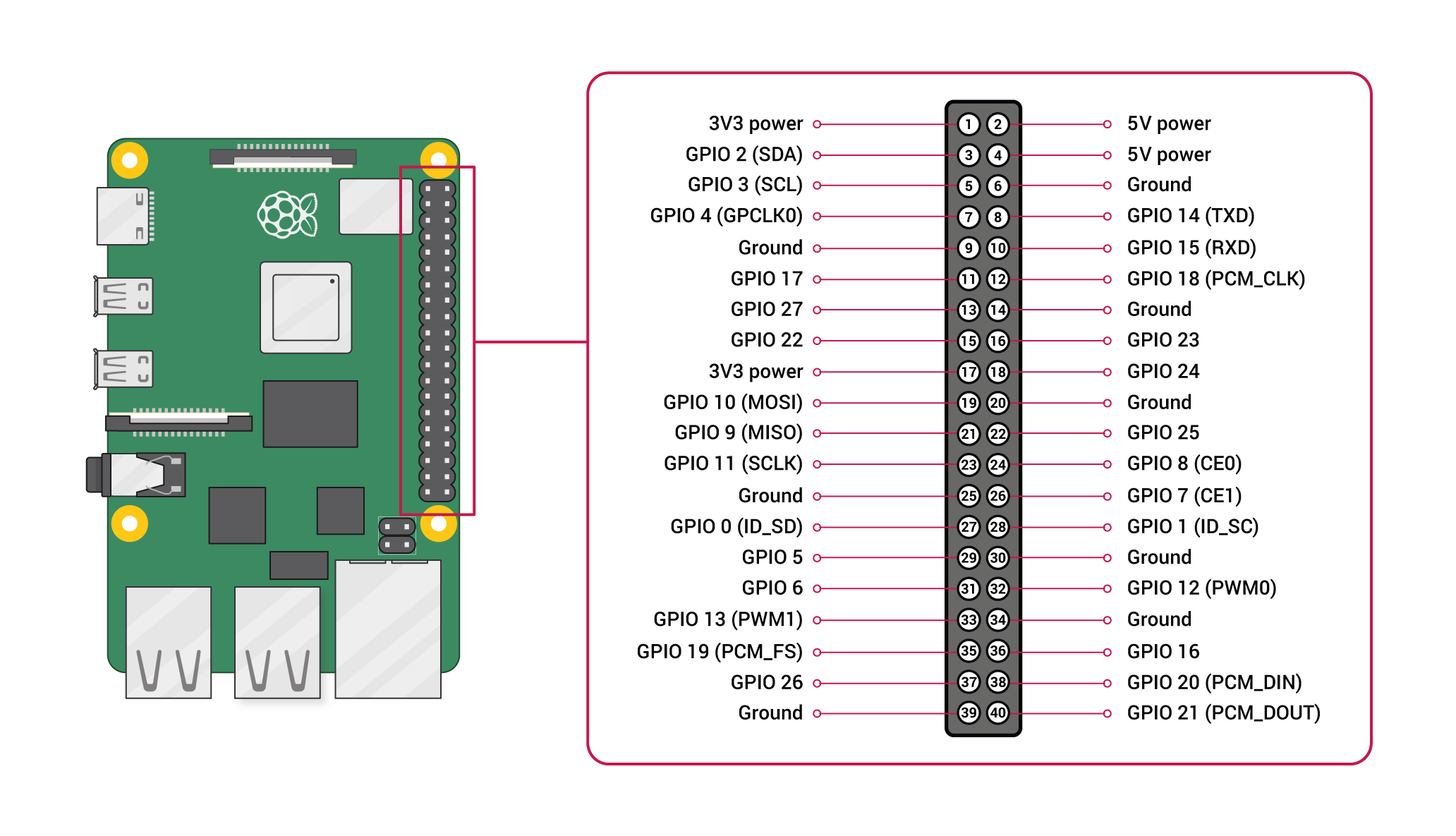
L’interface avec le monde physique se fait via un connecteur GPIO (General Purpose Input/Output) à 40 broches. C’est ici que la carte révèle son potentiel pour l’électronique et la robotique. Il est crucial de comprendre que la logique de ces broches fonctionne exclusivement en 3,3 volts. Contrairement à certains autres microcontrôleurs, les broches GPIO de la Raspberry Pi ne tolèrent pas les signaux 5 volts ; y connecter un appareil 5V sans convertisseur de niveau risque d’endommager irréversiblement la carte. Le connecteur offre également des interfaces de communication standard comme l’I2C et le SPI, permettant de brancher des capteurs, des écrans ou des modules de communication. Cependant, il faut garder à l’esprit que les puces Raspberry Pi ne possèdent pas de convertisseur analogique-numérique (ADC) intégré, ce qui oblige à utiliser des modules externes pour lire des signaux continus comme ceux d’un potentiomètre ou d’un capteur de lumière analogique.
L’alimentation de la carte se fait par un connecteur micro-USB, dédié uniquement à l’apport d’énergie, sans possibilité de transfert de données (OTG). La recommandation officielle est d’utiliser une alimentation de 2,5 ampères. Cette exigence n’est pas un simple conseil de confort : les baisses de tension en dessous de 4,63 volts déclenchent un avertissement de sous-tension, souvent visible par une icône en forme d’éclair à l’écran, et peuvent corrompre la carte SD ou provoquer des plantages. Les premiers modèles utilisaient une puce sans dissipateur thermique métallique, ce qui les rendait plus sensibles à la surchauffe. Depuis janvier 2019, la révision B0 intègre un dissipateur de chaleur pour maintenir des fréquences de fonctionnement stables, les processeurs réduisant automatiquement leur vitesse (throttling) lorsqu’ils atteignent 80 à 85 degrés Celsius pour éviter la surchauffe.
En termes de logiciel, la Pi 3 Model B est prise en charge par Raspberry Pi OS, ainsi que par de nombreuses distributions tierces comme Ubuntu, Arch Linux ARM, ou des systèmes spécialisés comme LibreELEC pour le multimédia et RetroPie pour le jeu vidéo. L’installation se fait en écrivant une image système sur une carte microSD. Un détail technique important concerne le démarrage : contrairement aux modèles plus récents, la Pi 3B n’a pas de mémoire EEPROM de démarrage mise à jour via le système. Le démarrage par USB, bien que supporté, doit être activé manuellement en modifiant un fichier de configuration, une opération qui modifie de façon permanente les bits de configuration interne de la puce. Bien que le processeur soit 64 bits, le GPU reste limité à 32 bits, ce qui impose parfois des compromis dans le choix des systèmes d’exploitation pour optimiser les performances graphiques.
Aujourd’hui, bien que le SoC BCM2837 soit officiellement en fin de vie pour les nouvelles conceptions industrielles, la Pi 3 Model B reste une plateforme robuste et largement documentée. Elle demeure idéale pour des projets tels qu’un bloqueur de publicités réseau (Pi-hole), un serveur d’impression 3D (OctoPrint) ou un centre multimédia léger. Sa longévité sur le marché et la compatibilité avec la quasi-totalité des tutoriels et des cartes d’extension (HATs) en font un choix pédagogique pertinent, à condition de respecter ses limites matérielles, notamment en matière de mémoire vive et de gestion thermique.
Pinout diagram
| Attr | Specs | verified |
|---|---|---|
soc | Broadcom BCM2837 (early boards) or BCM2837B0 (from Jan 2019, PCN RPI-PCN-Pi3B-001). (BCM2837 doc, retrieved 2026-10-13) | ✔ |
cpu | quad-core Arm Cortex-A53 (Armv8, 64-bit) at 1.2 GHz — "about 50% faster than the Raspberry Pi 2". The B0 die is capable of 1.4 GHz, but the 3B is clocked at 1.2 GHz. (official BCM2837/BCM2837B0 pages, above) | ? unverified |
gpu | VideoCore IV at 400 MHz (32-bit). (BCM2837B0 doc; fr.Wikipedia) | ✔ |
ram | 1 gb | ? unverified |
storage | microSD card slot (no eMMC option on the board itself). | ? unverified |
connectivity | - Wi-Fi: 2.4 GHz 802.11 b/g/n + Bluetooth 4.1 + BLE, on-board BCM43438 combo chip on SDIO/UART. Kernel device tree for the 3B declares compatible = "brcm,bcm43438-bt" (bcm271x-rpi-bt.dtsi); BT 4.1 per fr.Wikipedia. Dual-band Wi-Fi only arrived with the 3B+ (official 3B+ announcement, linked from official docs). - Ethernet: 10/100 Mbit RJ45 via SMSC/LAN9514 USB 2.0 hub+NIC (device tree include bcm283x-rpi-smsc9514.dtsi), i.e. Ethernet shares the USB 2.0 bus with the 4 USB ports. (bcm2710-rpi-3-b.dts) - USB: 4 × USB 2.0 (behind the LAN9514 hub). | ✔ |
video_audio | full-size HDMI, composite video + analog audio on the 4-pole 3.5 mm jack. | ? unverified |
camera_display | 15-pin CSI-2 camera connector, 15-pin DSI display connector. | ? unverified |
gpio | 40-pin header, 2.54 mm pitch; logic is 3.3 V only (5 V is NOT tolerant on GPIO pins); 2 × 5 V, 2 × 3.3 V, GND pins. Hardware PWM on GPIO12/13/18/19 (software PWM on all pins); SPI0 (GPIO7–11), SPI1/aux SPI (GPIO16–21); I²C0/1; UART0 (GPIO14/15) + mini-UART; no ADC and no DAC on any Raspberry Pi SoC. (GPIO on Raspberry Pi — official docs, retrieved 2026-10-13) | ✔ |
power | 5 V via micro-USB (power-only socket; no OTG/gadget). Official recommendation: 2.5 A PSU; maximum total USB peripheral draw 1.2 A; typical bare-board active current 400 mA (≈ 2 W). Undervoltage detection triggers below 4.63 V ±5% (rainbow/underline warning + log entry). (Power supplies — official docs, retrieved 2026-10-13) | ✔ |
thermal | Arm cores progressively throttled between 80 °C and 85 °C; at 85 °C both Arm cores and GPU are hard-throttled. (No soft limit — that arrived with the 3B+.) (Frequency management — official docs, retrieved 2026-10-13) | ✔ |
mechanical | 85.60 × 53.98 × 17 mm, ≈ 45 g. (fr.Wikipedia, retrieved 2026-10-13) | ✔ |
- Manufacturer: Raspberry Pi (Trading) Ltd. / Raspberry Pi Foundation (UK), with Broadcom. Manufactured at the Sony UK Technology Centre in Pencoed, Wales, and in China. (Wikipedia — Raspberry Pi, retrieved 2026-10-13)
- Year / release: February 2016. It was the first Raspberry Pi with a 64-bit processor and with integrated Wi-Fi and Bluetooth, and the first with USB boot support. (Wikipedia — Raspberry Pi, retrieved 2026-10-13)
- Launch price: US$35 (≈ "a little over €35" per French Wikipedia). (fr.wikipedia.org/wiki/Raspberry_Pi, retrieved 2026-10-13; official product page:
- Status: Long-lived product. The original BCM2837 SoC is discontinued: per official docs, "Raspberry Pi devices that include this chip are either End-of-Life or use a different SoC", and PCN RPI-PCN-Pi3B-001 (1 Nov 2018) moved Pi 3 Model B v1.2 production to the BCM2837B0 SoC (with metal heat spreader) from January 2019. (BCM2837 official page and PCN RP-001029-PC, retrieved 2026-10-13)
- Variants: PCB revision 1.2 only (revision codes a02082 / a22082 / a32082, 1 GB, Sony UK / Embest, device tree raspberrypi,3-model-b, SoC bcm2837). (revision-codes.adoc; kernel DTS) Siblings: Pi 3 Model B+ (Mar 2018, 1.4 GHz, dual-band Wi-Fi, PoE), Pi 3 Model A+ (Nov 2018), Compute Module 3/3+.
+ Strengths
- First Wi-Fi/Bluetooth Pi — the model that made the Pi truly cable-free; also the first 64-bit Pi (Cortex-A53) and the first with USB boot support. (Wikipedia)
- Same iconic 85.6 × 56 mm form factor, 40-pin GPIO, full-size HDMI and 4 USB — the "reference board" of the ecosystem; almost every Pi tutorial/HAT assumes this layout.
- Runs 64-bit OS images although the GPU and most historical distro support are 32-bit (GPU is 32-bit per official BCM2837B0 page).
- Still the cheapest way to get the full Pi 3 feature set; Compute Module 3/3+ offer the same silicon in an embedded SO-DIMM/CM format.
- No exotic peripherals: no PoE header (PoE arrived on 3B+), no IR, no CAN, no ADC — keep expectations aligned.
− Weaknesses
- Power-supply brownouts / undervoltage. The 2.5 A recommendation is not optional with peripherals: thin/long micro-USB cables drop below the 4.63 V detection threshold, causing the under-voltage warning (lightning-bolt overlay / Under-voltage detected in dmesg), SD corruption and instability. Official guidance: use the 2.5 A official PSU. (power-supplies.adoc, retrieved 2026-10-13)
- Thermal throttling. Hard limit at 85 °C with progressive back-off from 80 °C; early boards (pre-2019) used the BCM2837 without heat spreader, which is precisely why Raspberry Pi switched to the B0 package "for better thermals" in Jan 2019. Sustained all-core load in a closed case will clock down. (frequency-management.adoc; PCN RPI-PCN-Pi3B-001)
- 100 Mbit Ethernet shared with USB. The LAN9514 combines the 10/100 PHY and the 4-port USB 2.0 hub on one USB 2.0 link: heavy disk I/O or webcam traffic competes with network throughput, and gigabit speeds are impossible. (bcm2710-rpi-3-b.dts includes)
- 2.4 GHz-only Wi-Fi (802.11n, single antenna). Congested 2.4 GHz bands and BT/Wi-Fi coexistence on the shared BCM43438 antenna limit real throughput well below 100 Mbit; dual-band only came with the 3B+. (3B+ announcement blog)
- 1 GB RAM ceiling. Modern 64-bit desktop distros and browser-heavy use struggle; choose 32-bit Lite images for longevity.
- No USB gadget/OTG. The micro-USB socket is power-only on this generation, so "g_zero"/gadget tricks available on Pi Zero/4/5 are not possible.
- SD-card wear/corruption on hard power cuts (generic Pi issue, aggravated by the 4.63 V brownout behaviour above): use ro roots or power-cut-tolerant setups for kiosks.
- SoC obsolescence for new designs. BCM2837 is discontinued and the board's long-term supply is tied to the BCM2837B0; for new industrial designs Raspberry Pi steers customers to newer models. (BCM2837 official page)
- Retour d'expérience expert expert — expert-raspberrypi
- La Pi 3 Model B reste une référence solide, surtout si vous avez le modèle v1.2 (BCM2837B0 avec dissipateur intégré) sorti début 2019. Les premiers modèles sans radiateur thermique chauffent vite : à 85°C, le throttling est brutal et les performances chutent nettement, surtout en caisson fermé. C'e… — expert-raspberrypi
- Merci pour ce rappel sur le throttling. J'ai effectivement une v1.1 (sans le spreader) qui devient inutilisable en été dans son boîtier plastique. Je pensais que c'était un problème de ventilo, mais c'est bien la température du die. Par contre, tu mentionnes le Wi-Fi uniquement 2.4 GHz. J'ai du mal… — maker_hobby
- Pour ton problème Wi-Fi, c'est effectivement la coexistence sur le BCM43438 qui est pénible en environnement bruité, sans compter que le bus USB 2.0 partagé limite le débit max si tu as d'autres périphériques branchés. Si tu veux garder la carte pour du réseau, le filaire reste la seule option fiab… — linux_tinker
Community feedback and projects
- Orange Pi 3 review: A Raspberry Pi rival that's a serious disappointment techrepublic.com
- Review: Raspberry Pi model 3 B, with Benchmarks vs. Pi 2 jeffgeerling.com
- ODROID-C2 Compared to Raspberry Pi 3 and Orange Pi Plus jeffgeerling.com
Content not available yet.
- Schematic (rev 1.2)
- Mechanical drawings
- Mechanical drawings
- PCN — SoC change to BCM2837B0
- Official documentation
- Official documentation
- BCM2836 Arm peripherals spec (applies to BCM2837)
- Cortex-A53 TRM
- Linux kernel board DTS
- Firmware/bootloader
- Firmware/bootloader
- Community
- Community
- Community
- gpiozero docs
- gpiozero docs
- gpiozero docs
- Power-supply brownouts / undervoltage. The 2.5 A recommendation is not optional with peripherals: thin/long micro-USB cables drop below the 4.63 V detection threshold, causing the under-voltage warning (lightning-bolt overlay / Under-voltage detected in dmesg), SD corruption and instability. Official guidance: use the 2.5 A official PSU. (power-supplies.adoc, retrieved 2026-10-13)
- Thermal throttling. Hard limit at 85 °C with progressive back-off from 80 °C; early boards (pre-2019) used the BCM2837 without heat spreader, which is precisely why Raspberry Pi switched to the B0 package "for better thermals" in Jan 2019. Sustained all-core load in a closed case will clock down. (frequency-management.adoc; PCN RPI-PCN-Pi3B-001)
- 100 Mbit Ethernet shared with USB. The LAN9514 combines the 10/100 PHY and the 4-port USB 2.0 hub on one USB 2.0 link: heavy disk I/O or webcam traffic competes with network throughput, and gigabit speeds are impossible. (bcm2710-rpi-3-b.dts includes)
- 2.4 GHz-only Wi-Fi (802.11n, single antenna). Congested 2.4 GHz bands and BT/Wi-Fi coexistence on the shared BCM43438 antenna limit real throughput well below 100 Mbit; dual-band only came with the 3B+. (3B+ announcement blog)
- 1 GB RAM ceiling. Modern 64-bit desktop distros and browser-heavy use struggle; choose 32-bit Lite images for longevity.
- No USB gadget/OTG. The micro-USB socket is power-only on this generation, so "g_zero"/gadget tricks available on Pi Zero/4/5 are not possible.
- SD-card wear/corruption on hard power cuts (generic Pi issue, aggravated by the 4.63 V brownout behaviour above): use ro roots or power-cut-tolerant setups for kiosks.
- SoC obsolescence for new designs. BCM2837 is discontinued and the board's long-term supply is tied to the BCM2837B0; for new industrial designs Raspberry Pi steers customers to newer models. (BCM2837 official page)
- Allumer une LED via le GPIO avec libgpiod debutant Schéma : IMG-model-3b-debutant-1-model3b-led-gpio-libgpiod.svg — Raspberry Pi 3 Model B, broche 11 (GPIO17) vers résistance 330 Ω puis LED et 220 Ω vers GND broche 14
- Lire un bouton et afficher dans la console debutant Schéma : IMG-model-3b-debutant-2-model3b-bouton-console.svg — bouton-poussoir entre GPIO4 (broche 7) et GND (broche 6), résistance de pull-up interne activée, sortie texte sur la console
- Premier script Python sur le Pi debutant Schéma : IMG-model-3b-debutant-3-model3b-premier-script-python.svg — flux d'un script Python : éditeur nano, shebang, chmod +x, exécution dans le terminal et sortie LED GPIO17
- Variateur de luminosité LED en PWM intermediaire Schéma : IMG-model-3b-intermediaire-1-model3b-pwm-led.svg — LED sur GPIO18 (broche 12, broche PWM matérielle du BCM2837) avec résistance, signal PWM en dents de scie et variation du rapport cyclique
- Lire un capteur I2C (BME680) intermediaire Schéma : IMG-model-3b-intermediaire-2-model3b-i2c-capteur.svg — capteur BME680 relié à I2C1 : SDA broche 3, SCL broche 5, 3V3 broche 1, GND broche 9, adresses 0x76/0x77 selon broche SDO
- Configuration Ethernet et accès SSH intermediaire Schéma : IMG-model-3b-intermediaire-3-model3b-ethernet-ssh.svg — Raspberry Pi 3 Model B en tête-à-tête sur le réseau : prise RJ45 100 Mbit (LAN9514 partagé avec l'USB) reliée au routeur, client SSH sur un ordinateur
- Boot sur SD/USB et procédure de recouvrement avance Schéma : IMG-model-3b-avance-1-model3b-boot-sd-usb-recouvrement.svg — chaîne de boot du Pi 3B : ROM du SoC, bootcode.bin et start.elf sur la partition FAT de la microSD ou du disque USB, bit OTP program_usb_boot_mode activé une fois pour toutes
- Surveiller température et fréquence CPU avance Schéma : IMG-model-3b-avance-2-model3b-surveillance-thermique.svg — courbe de température du BCM2837 avec zones 80 °C (ralentissement progressif) et 85 °C (bridage matériel CPU+GPU), sondes vcgencmd et /sys/class/thermal
- Héberger un serveur web léger avance Schéma : IMG-model-3b-avance-3-model3b-serveur-web-leger.svg — Raspberry Pi 3 Model B servant un site statique sur le port 8080, service systemd, clients du réseau local connectés par Ethernet/Wi-Fi, contrainte mémoire 1 Go rappelée
Code library — examples written for this board
led_blink.pyPythonbutton_led.pyPythonservo_sweep.pyPythondht_temp.pyPythonoled_i2c.pyPythonmcp3008_read.pyPythoncam_photo.pyPythonweb_led.pyPythongpiotools_blink.shBashblink_c.cC
Examples and repos found online
- raspberrypi/noobs github.com
- WiringPi/WiringPi github.com
- joan2937/pigpio github.com
- raspberrypi/linux github.com
- retropie/retropie-setup github.com